
The Duty to Intervene
Black BeautySeveral characters learn that witnessing cruelty creates an obligation to act, even when intervention is inconvenient or socially risky.
increasing Bearing strength in each event
 decreasing
Bearing strength in each eventdecreasingThe Master Intervenes
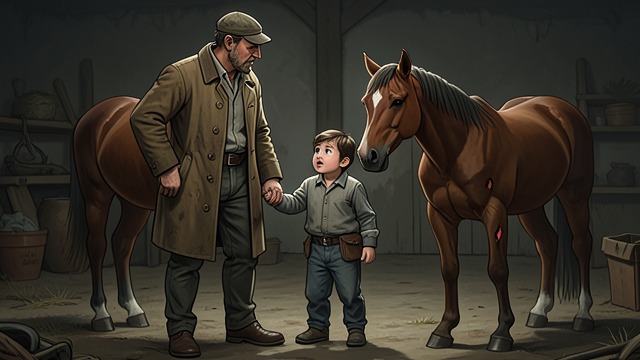
The Master Intervenes
Protecting the Colts
Squire Gordon catches Dick throwing stones at the young horses and dismisses him from the farm. He refuses to treat the harm as harmless play.
A Standard Set
Black Beauty sees that the animals’ comfort matters enough for a powerful adult to intervene. The act establishes protection as a responsibility, not a private preference.
Early justice shapes what he later expects from people.
John Confronts a Driver
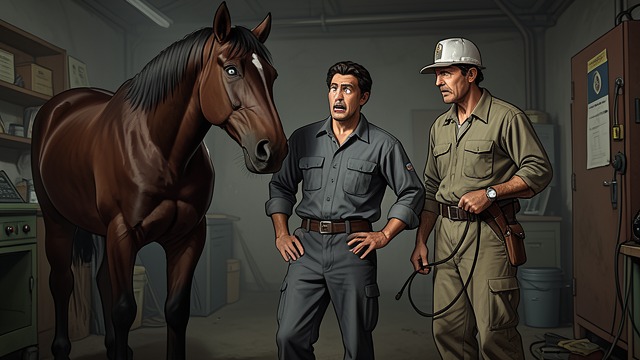
John Confronts a Driver
Witnessing Abuse
John Manly sees a builder wrench a pony’s head and whip it for turning toward a familiar gate. He approaches and challenges the man directly.
Public Accountability
Squire Gordon explains that force will not make the pony willing and condemns the driver’s conduct. Their intervention makes cruelty visible to its perpetrator.
The scene argues that social standing should not silence a witness.
Joe Goes for Help
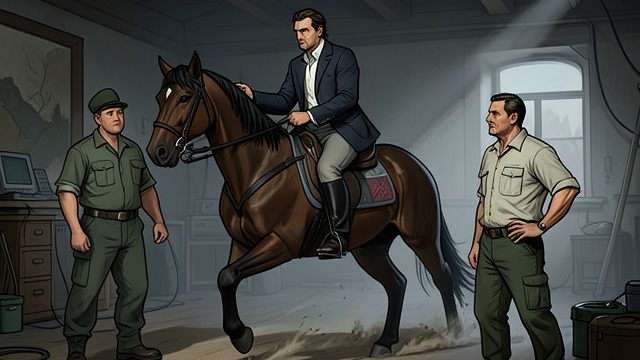
Joe Goes for Help
A Refused Warning
Joe asks a brickfield carter to stop beating horses trapped by a heavy load. The man ignores him and continues whipping.
Action Beyond Protest
Joe rides to fetch the brick-maker and later gives evidence. John praises the decision, explaining that cruelty and oppression are everyone’s business.
Joe’s conduct turns moral concern into effective intervention.
Mr. Wright Takes Notes
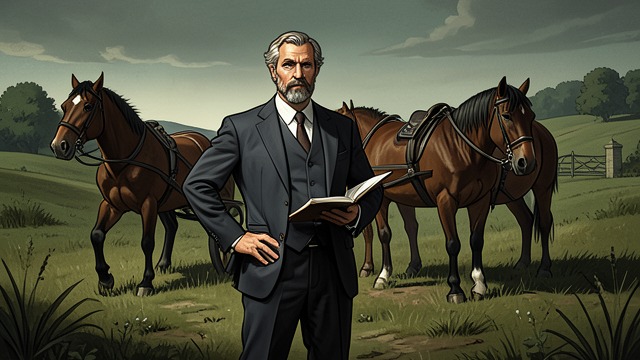
Mr. Wright Takes Notes
A Public Act of Cruelty
Mr. Wright sees a carter beat two horses that have started moving after waiting unattended. He threatens to report the conduct and records the cart’s details.
A Principle Explained
When challenged by his companion, he says that ignoring wrong makes witnesses share its guilt. Jerry agrees that people willing to speak up are badly needed.
Intervention becomes a deliberate civic practice.
The Girl Who Objects
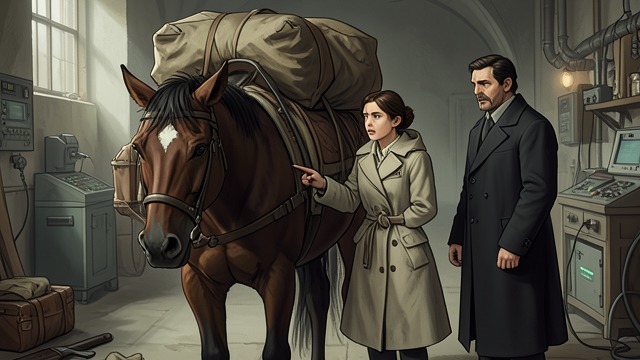
The Girl Who Objects
A Clear Warning
A young passenger sees that Black Beauty is weak and protests against loading the family and luggage into one cab. Her warning is dismissed by adults who prefer convenience.
Limits of Witnessing
She recognizes the cruelty but cannot control the driver or her father. Black Beauty collapses under the load soon afterward.
The episode shows both the importance and the limits of speaking up when authority refuses to listen.
During Black Beauty’s youth
During Black Beauty’s years at Birtwick
During Joe Green’s apprenticeship
During Black Beauty’s cab years
On the journey to Ludgate Hill
